Post-Treatment Skincare Guide: How to Care for Your Skin After Aesthetic Procedures
You've invested time and money in professional aesthetic treatments — now the way you care for your skin afterward can make or break your results. Post-treatment skincare isn't just about comfort during recovery; it directly impacts how well your treatment works, how quickly you heal, and whether you experience complications.
At RAAC Richmond, every patient receives personalized aftercare instructions. This comprehensive guide covers the fundamentals for each major treatment category, so you know exactly what to expect and how to optimize your results.
Universal Post-Treatment Rules
Regardless of the specific treatment, these foundational principles apply to virtually all aesthetic procedures:
1. Sun Protection Is Non-Negotiable
UV exposure is the single biggest threat to your treatment results. After any procedure that affects the skin barrier — peels, laser, microneedling — sun exposure can cause permanent hyperpigmentation, scarring, and compromised healing.
Minimum protocol:
- SPF 50+ broad-spectrum sunscreen, reapplied every 2 hours when outdoors
- Physical (mineral) sunscreen preferred during active healing (zinc oxide / titanium dioxide)
- Wide-brimmed hat and sun avoidance during peak hours (10am-4pm)
- This protection should continue for a minimum of 4-6 weeks post-treatment
2. Keep It Simple
Post-treatment is not the time to experiment with new products. Pare your routine down to the essentials: gentle cleanser, hydrating moisturizer, SPF. No actives, no exfoliants, no fragranced products until cleared by your provider.
3. Hydration Inside and Out
Drink plenty of water and keep skin well-moisturized. Healing skin needs moisture to repair efficiently. Look for products with hyaluronic acid, ceramides, and squalane.
4. Don't Touch, Pick, or Peel
Whether it's injection sites, peeling skin, or crusted areas — leave them alone. Touching introduces bacteria and disrupts the healing process. If skin is peeling, let it shed naturally.
5. Follow Your Provider's Specific Instructions
This guide provides general frameworks, but your physician's personalized instructions always take priority. Every patient's skin and treatment plan is different.
After Botox / Neuromodulator Injections
Botox and Dysport treatments have the simplest aftercare of all aesthetic procedures, but there are still important guidelines:
First 4 Hours
- Stay upright — don't lie down, bend over, or exercise vigorously
- Don't touch or massage the treated areas (this can cause the product to migrate)
- Avoid tight headbands, hats, or goggles that press on treated areas
First 24 Hours
- No intense exercise, hot yoga, saunas, or steam rooms (heat increases blood flow and can disperse the product)
- No alcohol (increases bruising risk)
- No facials, facial massage, or skin treatments
- You may apply gentle moisturizer and SPF — avoid rubbing aggressively
Days 2-14
- Normal skincare routine can resume after 24 hours
- Mild bruising at injection sites is normal — arnica cream or supplements can help
- Results begin to appear: Day 2-3 for Dysport, Day 3-5 for Botox
- Full effect visible at 10-14 days
- If you notice asymmetry at the 2-week mark, contact your provider for a follow-up assessment
Products to Use
- Gentle, non-irritating cleanser (Cetaphil, CeraVe, La Roche-Posay Toleriane)
- Lightweight moisturizer
- Mineral SPF 30-50
Products to Avoid (First 24 Hours)
- Retinoids / retinol
- AHAs / BHAs (glycolic acid, salicylic acid)
- Vitamin C serums (can be irritating at injection sites)
- Exfoliating scrubs
After Dermal Filler Injections
Dermal fillers (hyaluronic acid fillers like Juvederm and Restylane) involve more tissue manipulation than Botox, so aftercare is slightly more involved:
First 6 Hours
- Apply ice packs intermittently (10 minutes on, 10 minutes off) to reduce swelling
- Avoid touching, pressing, or massaging the treated area
- Stay upright and avoid lying face-down
First 24-48 Hours
- Swelling and mild bruising are normal and expected — especially for lip filler
- Avoid intense exercise, heat exposure, and alcohol
- No dental procedures for 2 weeks (pressure on the face can displace filler)
- Sleep on your back if possible, with head slightly elevated
Days 3-14
- Swelling typically resolves by day 3-5 (lips may take 7-10 days)
- Resume normal skincare routine after 48 hours
- Avoid facial treatments (massage, microcurrent, radiofrequency) for 2-4 weeks
- The final result is best assessed at 2-4 weeks once all swelling has resolved
Products to Use
- Arnica cream or oral arnica to reduce bruising
- Gentle cleanser and fragrance-free moisturizer
- Ice packs (wrapped in cloth, not directly on skin)
- Mineral SPF
Products to Avoid (First 48 Hours)
- Retinoids
- AHAs / BHAs
- Any product with strong active ingredients
- Makeup directly over injection sites (wait 12-24 hours)
When to Call Your Provider
- Increasing pain, especially in one specific area, several days after treatment
- Skin that turns white or bluish near the injection site
- Vision changes after facial filler
- Fever or signs of infection
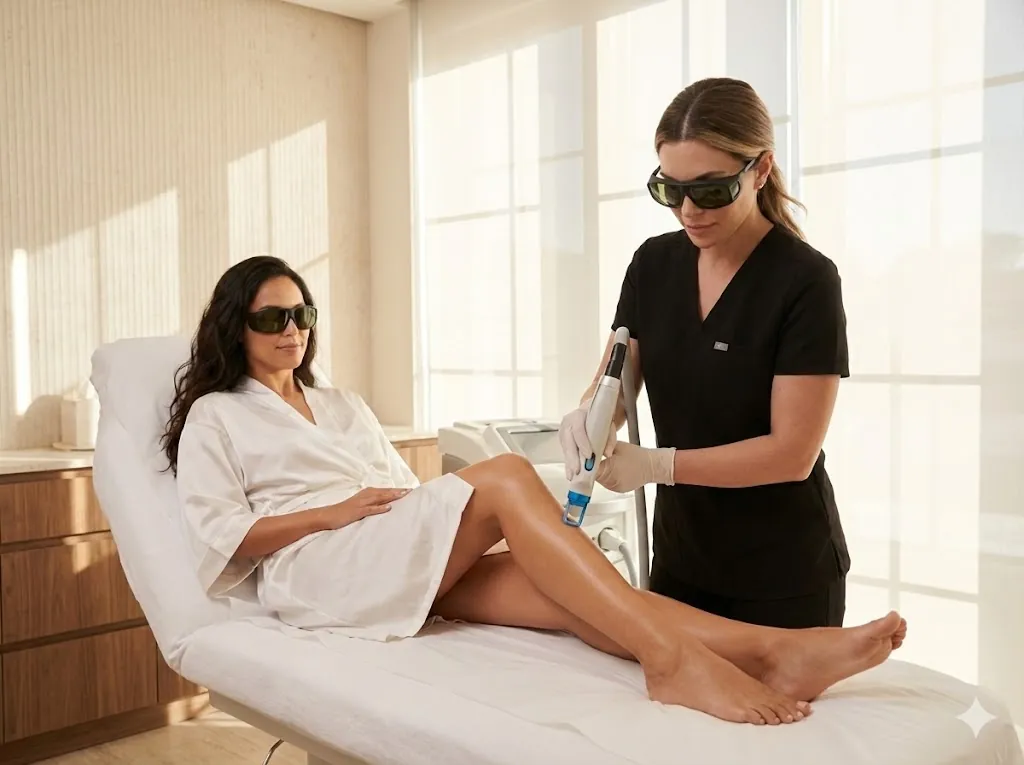
After Laser Treatments
Laser treatments vary widely in intensity — from gentle IPL to aggressive ablative resurfacing — so aftercare varies accordingly. These guidelines apply to most moderate laser treatments:
First 24 Hours
- Skin will feel like a sunburn — hot, tight, and red
- Apply prescribed soothing cream or ointment (often Aquaphor or a barrier repair cream)
- Cool compresses for comfort (not ice directly on treated skin)
- Avoid any products other than what your provider has specifically recommended
- No makeup
Days 2-5
- Redness and swelling gradually decrease
- Skin may develop a rough, sandpaper-like texture as micro-crusts form
- Do NOT pick, scratch, or exfoliate — let these shed naturally
- Continue gentle cleansing and prescribed moisturizer
- Absolutely no sun exposure — even brief exposure can cause lasting pigmentation changes
Days 5-14
- Most redness resolves by day 7-10 for non-ablative lasers
- Ablative laser recovery may take 2-3 weeks
- Gradual return to normal skincare products (introduce one at a time)
- SPF is critical for the next 3-6 months minimum
Products to Use
- Aquaphor or prescribed barrier repair cream (first 3-5 days)
- Gentle, non-foaming cleanser
- Hyaluronic acid serum (after initial healing phase)
- Mineral SPF 50+ (once skin can tolerate it, usually day 3-5)
Products to Avoid (First 1-2 Weeks)
- Retinoids (wait 2-4 weeks minimum)
- AHAs / BHAs / any exfoliating acids
- Vitamin C (can irritate healing skin; reintroduce at week 2-3)
- Fragranced products
- Physical exfoliants / scrubs
After Microneedling
Microneedling creates thousands of micro-channels in the skin to stimulate collagen production. Proper aftercare ensures these channels heal cleanly and the collagen response is maximized:
First 6 Hours
- Skin will be red, warm, and slightly swollen — like a moderate sunburn
- Apply only the serum or cream provided by your treatment provider
- No water, cleanser, or additional products on the skin
- Avoid touching your face — hands carry bacteria that can enter the micro-channels
First 24 Hours
- No makeup, sunscreen, or active skincare products
- No exercise, sauna, hot shower, or swimming
- No alcohol
- Sleep on a clean pillowcase (silk or satin preferred to reduce friction)
Days 2-3
- Gently cleanse with lukewarm water and a mild cleanser
- Apply hyaluronic acid serum and gentle moisturizer
- Mineral SPF when going outdoors
- Skin may feel dry, tight, and slightly rough — this is normal
Days 3-7
- Peeling or flaking may occur — do not pick or exfoliate
- Continue gentle, hydrating routine
- Redness typically fades by day 3-5
- Skin begins to feel smoother and look more luminous
Days 7-14
- Gradually reintroduce active ingredients (vitamin C first, then retinol at week 2-3)
- The collagen remodeling process continues for 4-6 weeks after treatment
- Full results visible at 4-6 weeks; optimal results after a series of 3-6 treatments
Products to Use
- Hyaluronic acid serum (the gold standard for post-microneedling hydration)
- Ceramide-based moisturizer
- Growth factor serums (if recommended by your provider)
- Mineral SPF 50+
Products to Avoid (First 3-5 Days)
- Retinoids / retinol
- AHAs / BHAs / any acids
- Vitamin C (wait until day 5-7)
- Benzoyl peroxide
- Makeup (wait 24 hours minimum)
- Fragranced products
After Chemical Peels (Including Longevity Peel)
Chemical peels — including the Longevity Peel — deliberately remove layers of skin to stimulate renewal. The depth of the peel determines the intensity of aftercare needed:
Light / Superficial Peels
Days 1-2:
- Mild pinkness and tightness — similar to a mild sunburn
- Apply gentle moisturizer and SPF
- Normal activities can resume immediately
Days 2-4:
- Light flaking may occur
- Keep skin moisturized — do not pull or pick at flaking skin
- Continue simplified skincare routine
Medium-Depth Peels
Days 1-3:
- Significant redness, tightness, and possibly mild swelling
- Apply prescribed soothing cream liberally — keeping skin moist accelerates healing
- No makeup, actives, or exfoliation
Days 3-5:
- Active peeling begins — skin will shed in sheets or large flakes
- This can look alarming but is completely normal
- Absolutely do not pick, pull, or forcefully remove peeling skin — this causes scarring and pigmentation
- Continue gentle cleansing and heavy moisturization
Days 5-7:
- Peeling mostly complete — new, pink skin revealed underneath
- This new skin is extremely sun-sensitive
- Begin SPF immediately; avoid direct sun exposure for 2-4 weeks
Deep Peels
Days 1-7:
- Follow all medium peel guidelines with even more vigilance
- Expect more significant swelling, especially around the eyes
- May require prescribed anti-viral medication and oral pain management
- Multiple daily applications of barrier cream
Days 7-14:
- Peeling resolves; persistent redness is normal
- Redness may last 2-4 weeks for deep peels
- Extreme sun protection for 3-6 months minimum
Products to Use After All Peels
- Gentle, non-foaming cleanser (CeraVe Hydrating, Cetaphil Gentle)
- Healing ointment (Aquaphor, CeraVe Healing Ointment) for first 3-5 days
- Hyaluronic acid serum (after initial healing)
- Rich, ceramide-based moisturizer
- Mineral SPF 50+ (once peeling is complete)
Products to Avoid After Peels
- Retinoids (wait 2-4 weeks)
- All exfoliating acids (AHAs, BHAs, PHAs)
- Vitamin C (wait 1-2 weeks)
- Physical scrubs or exfoliation
- Fragranced or alcohol-containing products
- Makeup during active peeling
Building Your Post-Treatment Skincare Shelf
Based on our recommendations across all treatment types, here are the essentials every aesthetic patient should have on hand:
- Gentle cleanser: CeraVe Hydrating Cleanser, La Roche-Posay Toleriane, or Cetaphil Gentle
- Hyaluronic acid serum: SkinCeuticals Hyaluronic Acid Intensifier or equivalent
- Ceramide moisturizer: CeraVe Moisturizing Cream or La Roche-Posay Cicaplast Baume B5
- Healing ointment: Aquaphor or CeraVe Healing Ointment
- Mineral SPF 50+: EltaMD UV Clear, La Roche-Posay Anthelios, or Colorescience
- Arnica: Topical cream and/or oral pellets for injection-based treatments
Your provider at RAAC can recommend specific medical-grade products from our soothing post-care line that are formulated for accelerated healing after aesthetic procedures.
When to Seek Help
Contact your provider or visit a medical professional if you experience:
- Increasing pain that worsens after day 2-3 instead of improving
- Signs of infection: pus, expanding redness, fever, warmth beyond the treatment area
- Unusual swelling or firmness weeks after filler
- Blistering or open wounds that don't heal normally
- Pigmentation changes that seem to be worsening rather than resolving
Early intervention is always better than waiting.
Book Your Next Treatment at RAAC Richmond
Whether you're recovering from a treatment or ready to start your aesthetic journey, RAAC Richmond is here to guide you every step of the way — from consultation through recovery and beyond. Book your appointment and experience physician-led care with comprehensive aftercare support.
RAAC Richmond Anti-Aging Clinic: 5811 Cooney Road, Suite 305, Richmond BC V6X 3M1. Serving Richmond, Vancouver, Burnaby, Surrey, and Metro Vancouver.